
Start With Claremont's Residents Directory
Every Claremont residents directory search goes better when you name the fact you need first. Want proof of who owns land? Go to the Los Angeles County Assessor. An exact situs address or a 10-digit AIN pulls up the parcel. That record carries the legal description, assessed values, exemptions, and transfer pointers, though the open web view can leave the owner name hidden. The newest deed fills that gap with its recorded parties. Older questions call for older tools. Directories, yearbooks, census schedules, maps, and obituaries can date a person in ways no current parcel screen can. Each source answers one question only. Ownership is not residence. A court party is not automatically a household member. A college directory may describe a single academic year, nothing more. Keep those labels attached to every result. The Claremont street directory method then lines up the parcel, deed, street index, and reverse-directory steps in order.
- Start with the full name, address, institution, spouse, or other anchor already known.
- Search the Assessor by exact address or AIN, and save the displayed parcel and event fields with the retrieval date.
- Use the recording date and document number to move from the parcel event to the RR/CC deed or recorded instrument.
- Use the county court, vital, voter, business, license, or unclaimed-property route only for the purpose and record type it allows.
- For a past household, pair a directory or yearbook with a census, newspaper, obituary, probate file, map, or college archive.
Claremont's Resident Records Offices
Claremont is incorporated, yet it keeps no records empire of its own. Los Angeles County holds the paper. Its Registrar-Recorder/County Clerk, the RR/CC, files recorded real-estate documents, vital copies, voter administration, fictitious business names, marriages, and notary filings. The Assessor supplies the parcel evidence. The Superior Court holds the cases. City Hall keeps only what Claremont itself created. That means planning files, permits, and council material. Access works differently at each counter. RR/CC takes copy orders online and offers index viewing at county facilities. The Assessor portal handles address, AIN, and map lookups but limits public owner display. Elections lets voters check their own registration. A full voter file, though, requires a permitted purpose and a contract. Start with the custodian, the record type, a name or address, and a date range.
Los Angeles County RR/CC
12400 Imperial Highway
Norwalk, CA 90650
(800) 201-8999, options 2 and 3
Los Angeles County Assessor
Public parcel and map portal
Address or AIN search
Online portal and office inquiry
Los Angeles County Elections
12400 Imperial Highway
Norwalk, CA 90650
(800) 815-2666, option 4
The county's recorder and elections gateway sorts Claremont requests by service.
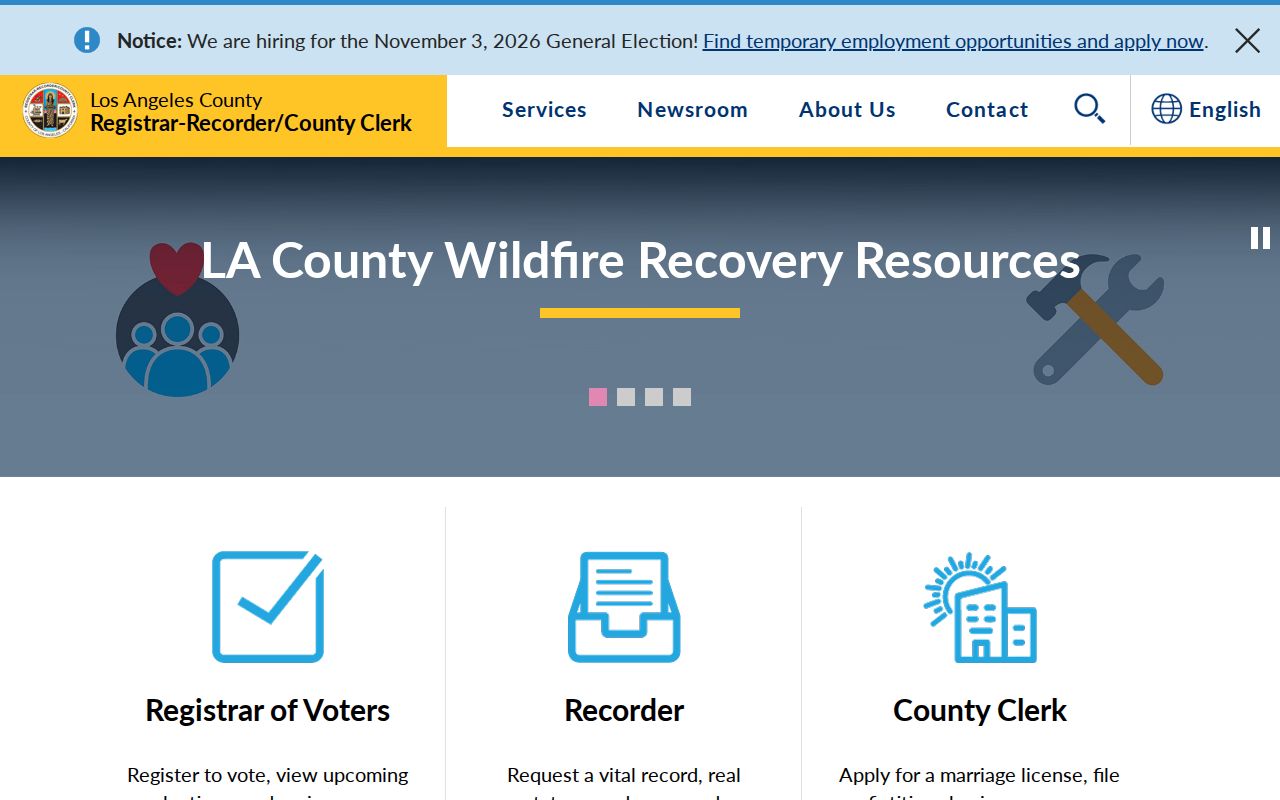
The gateway explains the split plainly. Deeds, voter rolls, vital certificates, and county clerk filings sit with different offices, and no single public search box reaches them all.
From Name to a Claremont Address
A name alone is a lead, never an identity. Anchor it before you trust it. A former address works. So does a middle initial, a spouse, a college, an age range, a business role, or a case number. Then check two custodians that did not copy from each other. An Assessor parcel paired with a recorded deed can build an ownership trail. A directory or yearbook can place someone at a Claremont address during a specific period. A license or business filing corroborates a public role. Label it a professional or business address, not a home. The strongest match rests on two independent facts. The same spelling plus the same address works. A spouse and a date works too. So do an institution and a street, or a court record and a parcel. Preserve the messy details too. Spelling variants, initials, former surnames, and trust or entity names all matter. Never merge two people simply because both appear in Claremont records. A separate resident lookup keeps each one-person chain clean.
Claremont Assessor Search Fields
The Los Angeles County Assessor Portal is built for parcels, not households. Enter an exact address or a ten-digit AIN, or work from the map mode. A single parcel record can hold a lot. It may show the situs, the legal description, the use code, status, exemptions, and assessed values. It may also include an event history listing recording date, document number, type, and reason. One caution applies to any Claremont resident lookup here. Results flagged as unrestricted may suppress the owner name. A blank name field signals a visibility limit rather than a missing record.
| Field label | Type | Required | Format or use |
|---|---|---|---|
| Search by AIN or Address | Text or autocomplete | One key | Use a 10-digit AIN or an exact street address and select the match. |
| Map Search | Map mode | No | Pan, zoom, and click parcel outlines to open detail. |
| Assessor Internet | Linked service | No | A secure or legacy route may require registration. |
| Show Re-Assessable Only | Checkbox | No | Filters the event and roll tables. |
| Hide Inactive Rolls or Show All | Checkbox | No | Changes which roll or event rows appear. |
When the portal hides an owner name, other lawful channels still work. The secure Assessor service can close the gap. An office inquiry, the tax bill, the deed index, or another official route can too. Record the AIN, the legal description, the event number, and the data-effective date. Do this before moving on. An exemption hints at owner occupancy only after its type and tax year check out. No exemption proves nothing at all. The Assessor parcel search supplies the bridge fields a deed request needs.
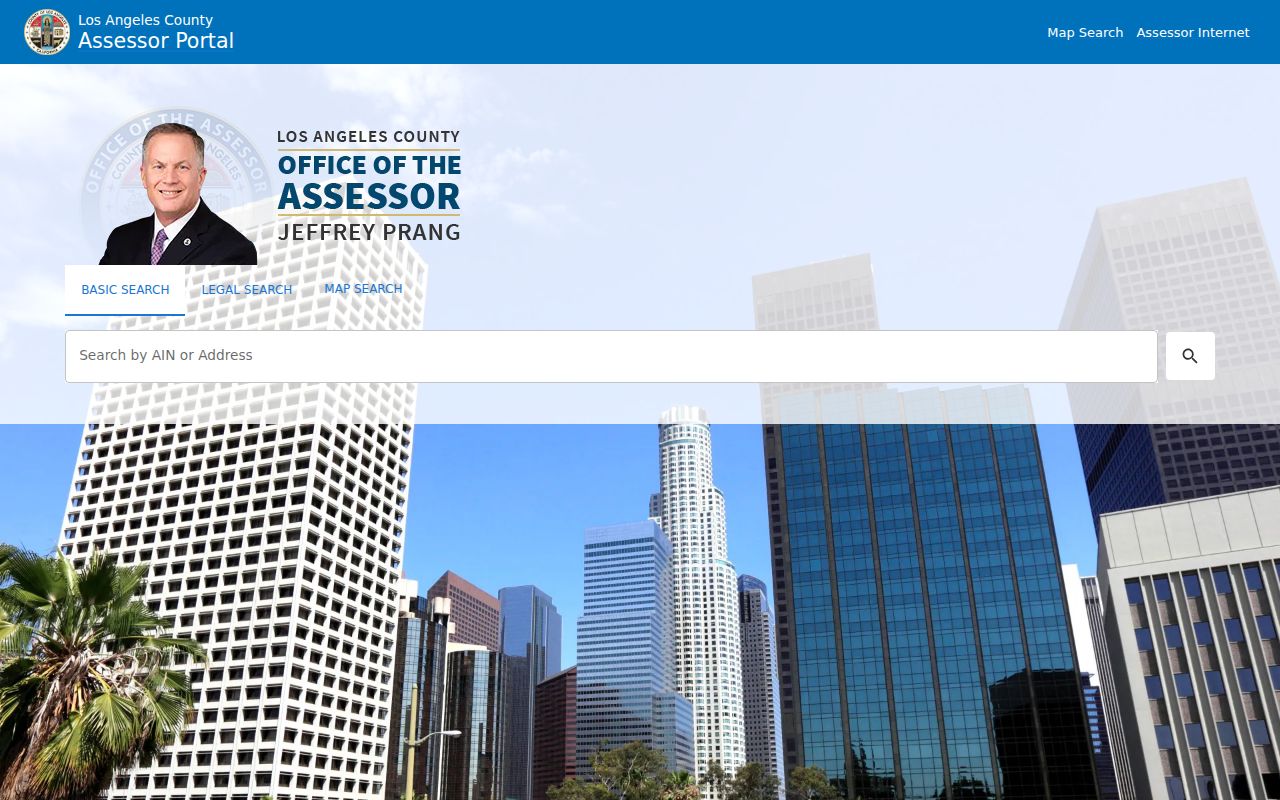
A parcel view can pin a search to one AIN with precision. Still, it cannot list every person living at that situs. It is one record, not a household roll.
Current Claremont Resident Directories
Claremont proof of residency comes from records that each play a different role. The property roll describes land. A court index names a case participant. A city permit lists an applicant or contractor, and a college directory confirms a campus affiliation. No single record works as a full household residents directory. The table pairs each source with its keeper and its access limit.
| Source | Who or what it identifies | Keeper | Access |
|---|---|---|---|
| Assessor parcel and tax evidence | Situs, AIN, legal description, values, events | Los Angeles County Assessor | Free portal; owner channel varies |
| Recorded-document index | Grantors, grantees, liens, releases, maps | RR/CC | Viewing, copy order, counter, or request route |
| Voter self-lookup | A person's own registration and election information | LA County Elections | Self-verification only |
| City files | Applicants, contractors, cases, public correspondents | Claremont departments | Department inquiry or CPRA request |
| College and professional directories | Academic or public work affiliation | Colleges, state boards, or agencies | Collection or board rules |
These four terms keep a Claremont resident-record search from blending unlike records.
- Roll
- An assessment or tax list arranged around parcels, values, or status, not a household list.
- Index
- A finding aid with names, parties, dates, or document numbers pointing to a record.
- Criss-cross directory
- A reverse directory arranged by street and house number, with an occupant when held.
- Parcel
- A legally tracked land unit identified by an AIN, situs, boundaries, and legal description.
Each Claremont residents directory source answers a different question about a resident lookup. The recorder can confirm a transfer, while a street directory shows who occupied a property at a given time, and a business filing names an agent or mailing address. Matching the right record to the right question keeps the Claremont record trail honest.
The Claremont Deed Trail Starts in 1850
Los Angeles County's Recorder/County Clerk traces its real-estate holdings back to 1850, which predates the Claremont townsite itself. Online copy orders run through LexisNexis and take up to 20 working days. The Assessor's event row gives you a recording date and document number. From there, pick an RR/CC route: viewing, counter help, the index, or a copy service. Older records lean on grantor and grantee names, the year, a document number, and a book or page citation when the source supplies one.
Know the vocabulary before you dig. A grantor transfers an interest; the grantee receives it. A deed of trust records financing. A reconveyance releases that security interest. When a street name, number, tract, or parcel has changed, the legal description controls, so match it against AIN history before you treat a stack of documents as one continuous trail. The RR/CC viewing instructions lay out the in-person channel for anyone who wants to inspect the index or document path directly instead of opening with an online copy order.
Claremont Court Names and Case Numbers
Claremont cases sit with the Superior Court of California, County of Los Angeles. Case-number access is free; party or defendant-name searches cost money. Coverage is broad. Unlimited civil, family, and probate matters reach back to 1983. Limited civil reaches to 1991, and small claims to 1992. A criminal search can surface a case number, filing date, charges, or disposition where public. Federal matters go through the Central District of California on PACER.
Each tool answers a different question. The portal may offer a calendar or an eligible document image. Pricing is tiered: $1 per page for the first five pages, $0.40 after that, capped at $40. Criminal and family images generally stay off remote access. Courthouse terminals and clerk requests remain the fallbacks. A name hit alone is thin. Anchor it with a middle initial, a date, a filing location, counsel, or an address in a filing. Use the Los Angeles Superior Court case search for the index. Use the court's fee information for current access costs.
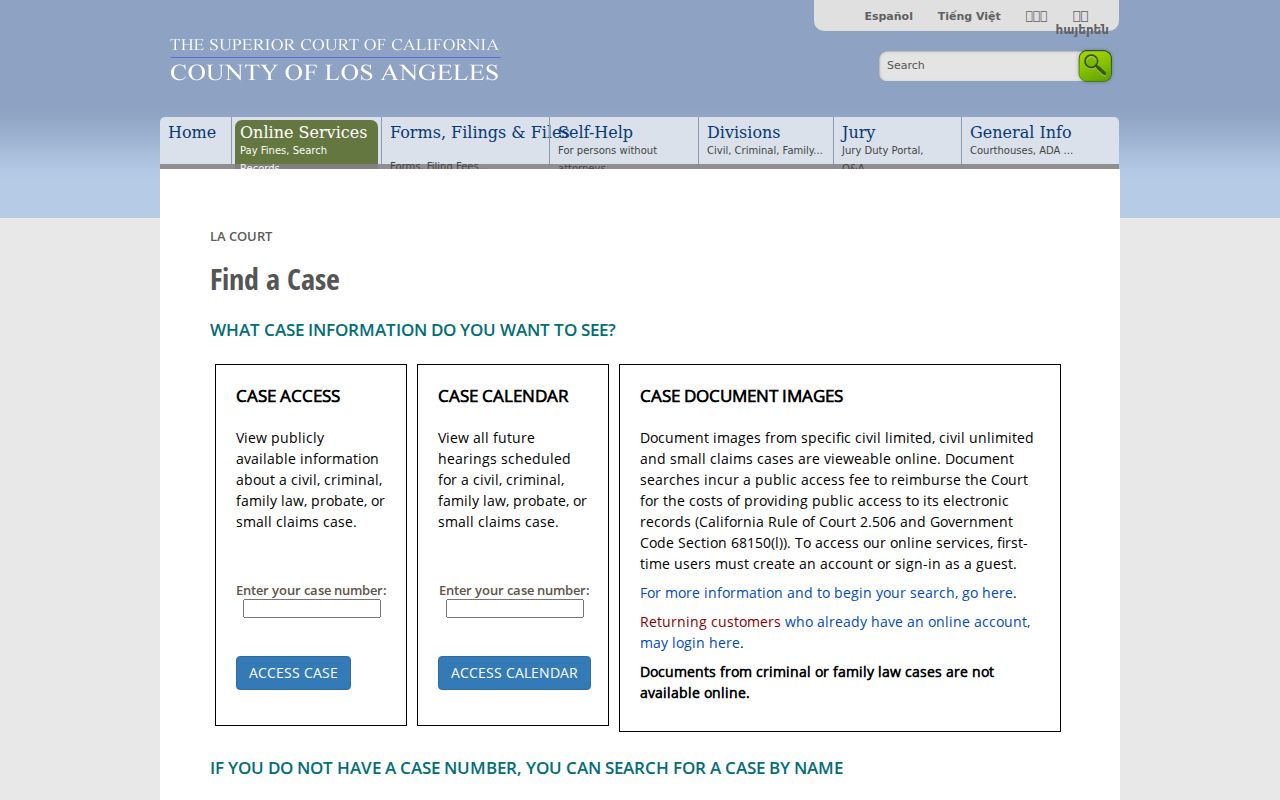
The court portal is a case gateway. It is not a public roster of every Claremont resident, and sealed, juvenile, family, and confidential records carry separate limits.
California Voter Data and Claremont Addresses
A Claremont resident-record search hits a legal gate when it reaches voter data. The county's Find My Election Information service lets a person check their own registration and election details. But it is not a public name-and-address directory. Elections Code section 2194 allows voter information for election, scholarly, journalistic, political, or governmental purposes. That access comes under a signed contract with conditions. Personal, private, and commercial use is barred. Social Security numbers, driver's-license numbers, and signatures stay confidential.
Eligible requesters can order county, city, district, or precinct files. Countywide information is priced at $146. Precinct, district, or city information costs $54, and an additional file runs $39. The Index to Voter, also called the Street Index, carries its own per-thousand or per-page prices. Those depend on the requester and permitted political purpose. Requests go by mail or in person to Election Information, second floor, room 2013, 12400 Imperial Highway, Norwalk. The documented phone route is (800) 815-2666 option 4.
A missing name means little on its own. It can reflect a move, an update delay, inactive or cancelled status, a formatting quirk, or a confidentiality flag. It is not proof that a person has left an address. Keep the public self-check and the restricted street index in separate parts of the Claremont record trail.
Vital Records and Claremont Copy Types
Los Angeles County RR/CC issues county birth, death, and marriage copies. The California Department of Public Health Vital Records maintains the statewide system. A certificate search and a certified copy are not the same thing. Authorized copies require an eligible relationship, purpose, court order, or other statutory route. Informational copies sit at another access level and cannot establish identity. Confidential marriage records stay restricted under Family Code sections 509 through 511.
The 2026 schedule prices a birth copy at $31, death at $26, marriage at $19, and dissolution at $18. A search fee stays due even when no record turns up. Current CDPH forms ask for applicant details, event details, names, date and place, relationship, purpose, copy type, a sworn statement, a signature, and payment. Mailed authorized requests can require notarization.
Some distinctions matter here. A divorce certificate is not the Superior Court judgment. Adoption records are confidential, with reunion routes that depend on consent and relationship. California sets no single age threshold that opens every vital certificate. Historical indexes are discovery tools, not blanket access to modern copies. The California vital-records service identifies the statewide custodian and current application routes.
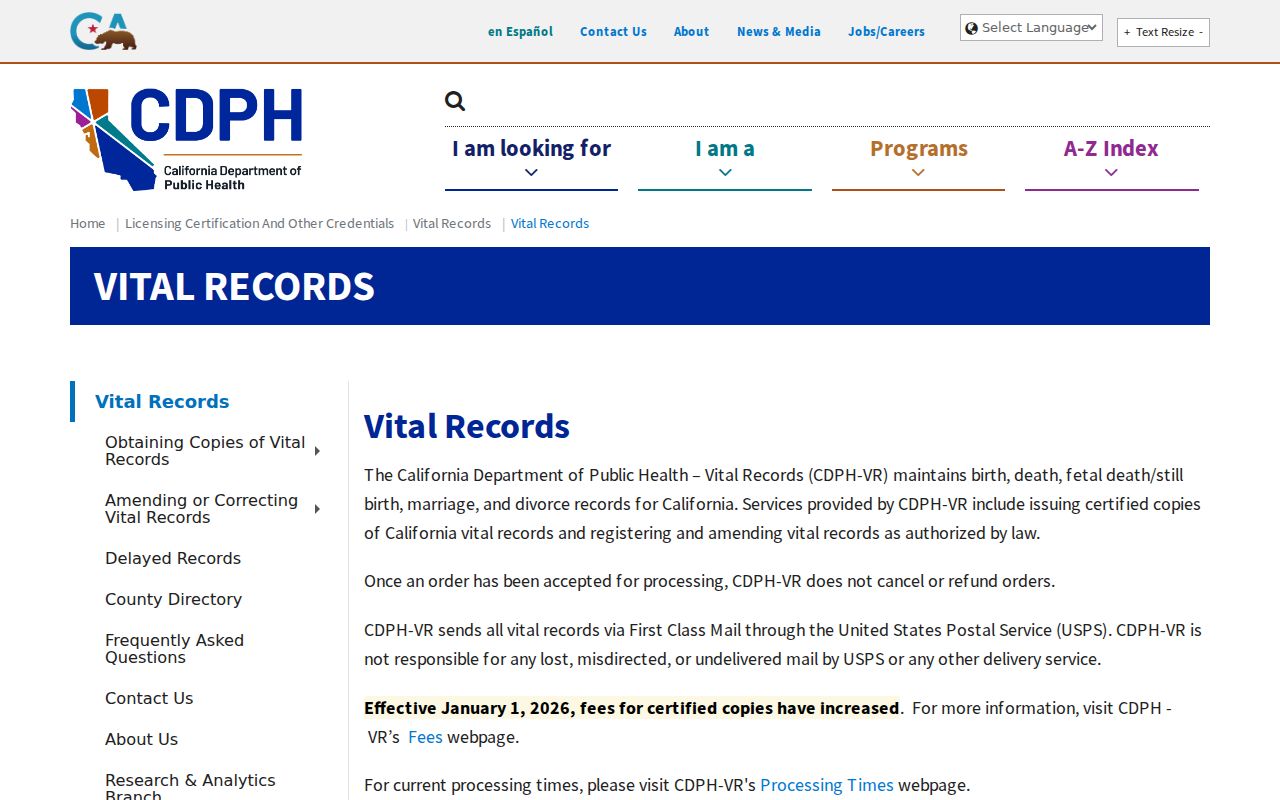
The application list helps separate a historical index clue from the copy request that can legally confirm an event.
Historical Claremont Directories and Archives
Claremont keeps a resident trail that reaches well past the county portals. Several repositories hold the older material. The Claremont Colleges Library points to Claremontiana, city directories, maps, newspapers, photographs, ephemera, manuscripts, and local histories. College catalogs, yearbooks, handbooks, organization scrapbooks, faculty papers, oral histories, and campus plans can place a person at an institution. This can hold true even when a property roll does not. Scripps material lives separately in Denison Library. Search the shared library, then the college archive.
A college directory entry is not a permanent Claremont residence. A student may appear for one academic year. A faculty or staff record may show a campus role and a public work contact. A campus parcel may use an institutional delivery point. For a classmate search, start with yearbooks and catalogs. Then compare the name, academic year, organization, and any known address against a public professional or organization record. Treat the historical collection as a dated affiliation layer.
The Claremont city directory collections add the broader historical shelf. College archives explain the institution-specific trail that ordinary city volumes may miss.
A Narrow Claremont CPRA Request
A narrow request beats a broad one. Ask for an existing record, never a list staff would have to build. The Claremont City Clerk public-records route fits council material. It also covers planning cases, permits, code files, contracts, and departmental records. State the street, parcel if known, record type, department, subject, and date range. A permit application or inspection chronology is the right target.
The California Public Records Act, Government Code sections 7920.000 and following, sets the clock. It generally requires a determination within 10 calendar days. A 14-day extension is possible. Inspection is ordinarily free. Duplication or specialized statutory fees can apply. Exempt material may be redacted. Building files may withhold personal contacts, copyrighted plans, security details, or active enforcement material. Deeds, voter files, court cases, and vital certificates belong with their own custodians. So the RR/CC CPRA route does not replace the special real-estate process.
Check Two Claremont Identity Anchors
Official records and commercial compilations serve different purposes. A county or state custodian states what its record means. It also notes when the record was created, and what access rule applies. A commercial compilation can merge public, licensed, and inferred data from many places. It can be a lead. Yet it may be stale. It may join two people with the same name, or lack a clear correction path. Neither counts as proof. The original custodian has to confirm the material fact first.
| Route | Strength | Limit | Best next check |
|---|---|---|---|
| Official parcel, deed, court, or vital record | Named custodian, defined fields, record date | Access, redaction, and eligibility rules apply | Read the original record or ask the custodian |
| Official library, college, or yearbook source | Dated affiliation, address, occupation, or context | Collection gaps and academic-year limits | Pair with a census, deed, obituary, or later source |
| Commercial compilation | May surface spelling or address leads | Mixed sources, stale data, unclear provenance | Verify every key fact at its source office |
Two independent anchors work best. Think of a matching address and spouse. An AIN and legal description also works. So does a yearbook affiliation paired with a dated public record. Keep owner, occupant, agent, applicant, mailing recipient, and case participant as separate labels. That small habit prevents a false match in a Claremont identity search.
Claremont Protected Addresses and Privacy
California privacy rules shape any Claremont resident search. Safe at Home, under Government Code section 6205 and following, gives qualifying survivors and specified protected people a substitute mailing address, mail forwarding, and confidential voter registration. Voter files suppress protected registrations. Recorded documents use redaction and petition mechanisms for sensitive identifiers, not blanket deletion. The California Consumer Privacy Act and California Privacy Rights Act give covered consumers rights to know, access, delete, correct, and opt out of sale or sharing, subject to exemptions. Exemptions still apply. Official privacy guidance carries the current deletion procedures. DMV information is different. The federal Driver's Privacy Protection Act and California law keep it closed without a permitted use.
Lawful use. Claremont records are for personal, lawful research. Do not use an address, voter, court, or property trail to stalk, harass, intimidate, or harm another person.
Check the Safe at Home program and the county voter rules first. A missing name or address may simply be protected.
The 1887 Claremont Townsite Trail
Claremont records read better alongside town and county history. Los Angeles County was created in 1850, and RR/CC holdings start there. Claremont was laid out in 1887 after the Santa Fe route opened, and the Pacific Land Improvement Company mapped a railroad town. A failed hotel scheme left the hotel available to Pomona College. Its 1888 move gave the town an institutional anchor. An old address can pass through Rancho San José land, a company tract, a college parcel, and later subdivisions.
Early citrus planting, packing houses, water companies, photographs, newspapers, and business records add residents who never appear as parcel owners. Growth peaked after World War II. More than 1,500 residents arrived yearly during 1960-1965. Groves became new parcels. Plats, permits, Assessor events, Sanborn maps, and directories must be read together. The record trail is linked evidence. Preserve the source, date, and role beside every name.