
Claremont ZIP Coverage by Delivery Type
Claremont’s postal picture is compact but easy to misread. The ordinary street-delivery identity is different from the PO-box identity, and neither one is a legal city boundary. The two ZIP codes below are the confirmed Claremont service categories in the research record.
| ZIP | Areas Covered | Post Office | Notes |
|---|---|---|---|
| 91711 | Nearly all ordinary Claremont street delivery, including the Village, colleges, north and foothill areas, and south Claremont | Claremont Post Office, 140 N Harvard Ave | Postal footprint, not a legal city line; edge addresses can differ |
| 91713 | PO boxes associated with Claremont | Claremont postal facilities | Do not map it as a residential neighborhood |
Use the USPS ZIP Lookup for a specific street address. ZIP 91711 is useful for grouping ordinary delivery addresses. ZIP 91713 is mainly a box identity, so a name paired with 91713 may describe mail receipt rather than a place where a person lives.
Why 91711 Defines Claremont Street Delivery
For an ordinary Claremont street address, USPS standardization is the first practical check. Enter the street, city, and state, then preserve the standardized street suffix, directional, ZIP5, and ZIP+4. A postal directory can use the five-digit value for a broad group, while the four-digit extension identifies a narrower delivery segment and should not be mistaken for a neighborhood boundary.
The mailing line can still differ from the government record. The Assessor uses a situs address for the parcel and may list a separate tax-mailing destination. A deed may prioritize parties and legal description. A college department may use one central delivery point while activity spans campus parcels. Keep those fields labeled rather than replacing one with another.
The USPS address lookup form is the source for the delivery result used in a Claremont postal directory.
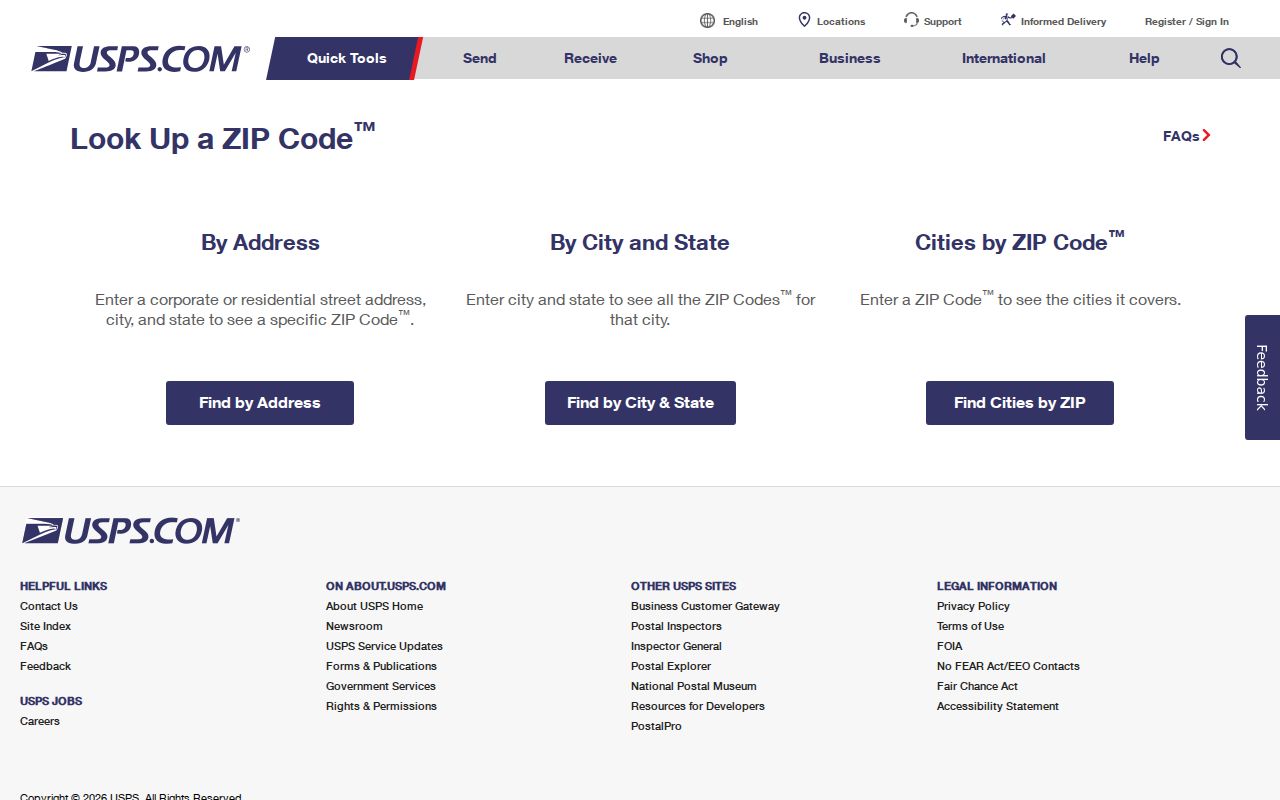
The USPS result should be saved with the retrieval date. A later interface or delivery change can alter the standardized line without changing the parcel’s legal description.
What 91713 Means for Claremont PO Boxes
91713 is chiefly associated with Claremont PO boxes. That makes it a useful clue about where mail is received, but a poor proxy for a residential area. A PO-box ZIP does not outline a set of homes, and a person using one can have a street address elsewhere. A directory record that shows 91713 should be labeled as postal receipt information unless another source supplies a situs or residence fact.
County systems answer different questions. The Assessor can locate a parcel by address or AIN, the election office can verify a person’s own registration information, and the Recorder keys real-estate documents to parties and legal descriptions. None turns a PO-box ZIP into a complete resident list. For a broad grouping, confirm the postal type first; for a person or parcel, move to the custodian that owns the underlying fact.
Finding Claremont Residents by ZIP
A ZIP-keyed search works as a sequence of verifications, not a single public filter. USPS confirms delivery. Official GIS and parcel systems test jurisdiction and parcel placement. The Assessor supplies parcel details but does not expose a verified ZIP-wide owner browse. The county voter tool is for personal election verification, while voter-file products require a permitted Elections Code section 2194 purpose.
- Run the address through USPS and save the standardized ZIP5 and ZIP+4 result.
- Check the official parcel or GIS map to ask whether the parcel lies inside incorporated Claremont.
- Use the Assessor address or AIN search for parcel facts, not as a ZIP-only household roll.
- Use the county voter self-lookup only for the person’s own status; do not turn it into a general name search.
- Once a ZIP narrows the area, move to the Claremont street directory for address-level record work.
For a historical address, do not retrofit a modern postal code onto an old entry. ZIP Codes began in 1963. Use the contemporaneous city, street, tract, or legal description, then bridge it to a current parcel.
Claremont ZIP Code Search Ends at Parcel
The Los Angeles County Assessor Portal accepts an exact address or a 10-digit AIN, plus a map mode. Its public detail can show situs, use, parcel status, legal description, characteristics, values, assessment history, and transfer-event pointers. The unrestricted web result suppresses owner names in the sample reviewed, so it is not a dependable household directory.
| Assessor field | Use in a postal workflow |
|---|---|
| Search by AIN or Address | Choose one 10-digit AIN or a selected street-address match. |
| Map Search | Pan, zoom, and click parcels to compare their situs and AINs. |
| Show Re-Assessable Only | Filter event and roll tables; it is not a ZIP filter. |
| Hide Inactive Rolls or Show All | Change which parcel history rows appear. |
| Rows per page | Pagination control for parcel and event tables. |
Current owner information may require a secure registered service, an Assessor inquiry, a tax bill, or the Recorder’s deed channel. The public parcel view remains valuable for checking whether a USPS address maps to the expected legal parcel.
Claremont ZIP Codes and Campus Mailboxes
Claremont’s colleges create a special address problem. Large institutional parcels, residence halls, department mailrooms, and academic-year directories can all place a person near a postal label without describing a permanent household. A college directory entry should be dated by academic year and labeled as institutional affiliation.
The same caution applies to parcels created during growth. Claremont began as an 1887 Santa Fe townsite, later expanded over former citrus land, and grew around the colleges. A modern postal label, AIN, and street number may not map neatly onto a historical directory entry. Historic tract maps, Sanborn sheets, and legal descriptions are stronger bridges than mailing labels alone.
Large parcels also break simple counting. One campus address can contain many buildings, while a PO box can serve mail for people or organizations whose physical locations are elsewhere. A postal directory should keep delivery identity, parcel identity, and person affiliation in separate columns.
Where Claremont ZIP Codes Meet City Limits
A postal city and an incorporated city are not the same map. “Claremont, CA 91711” can be a useful mailing line without proving that the parcel lies inside the city. Edge properties can use a neighboring postal convention, while the government jurisdiction follows the parcel boundary. Confirm incorporation in official GIS and delivery in USPS before treating either as settled.
- ZIP code
- A five-digit postal routing area used to sort and deliver mail.
- ZIP+4
- A four-digit extension that narrows a ZIP5 to a delivery segment or group.
- PO-box ZIP
- A ZIP chiefly organized around post-office boxes rather than street-delivery geography.
- Unique ZIP
- A postal code assigned to one institution or special delivery identity; no additional active Claremont unique ZIP was confirmed.
- Carrier route
- A delivery path used by postal operations, not a legal boundary or resident roll.
That distinction protects the meaning of a postal directory. A postal result answers where mail should go. GIS answers where a parcel sits. The city and county answer which government holds a record.
Claremont ZIP Lines: USPS, GIS, ZCTA
Three geographic products may look similar while measuring different things. USPS operates delivery routes. County GIS displays parcels and jurisdictional clues. A Census ZIP Code Tabulation Area approximates a postal area for statistics, but it is not the USPS boundary and does not settle a city-limit question.
| Source | Best question | Do not infer |
|---|---|---|
| USPS lookup | What ZIP and standardized line deliver to this address? | That the parcel is inside city limits |
| Assessor and GIS | Which parcel, AIN, situs, and nearby government geography apply? | A complete occupant list or postal boundary |
| Census ZCTA | What statistical area approximates the ZIP for population measures? | The exact postal route or legal city line |
When a result conflicts, retain both labels and name the conflict. A postal directory built from a ZCTA alone can include or exclude edge territory differently from USPS operations and Claremont’s incorporated boundary.
The California privacy guidance also matters when ZIP-level data is paired with a name. A broad geographic grouping can become identifying when combined with a narrow address or rare institution.
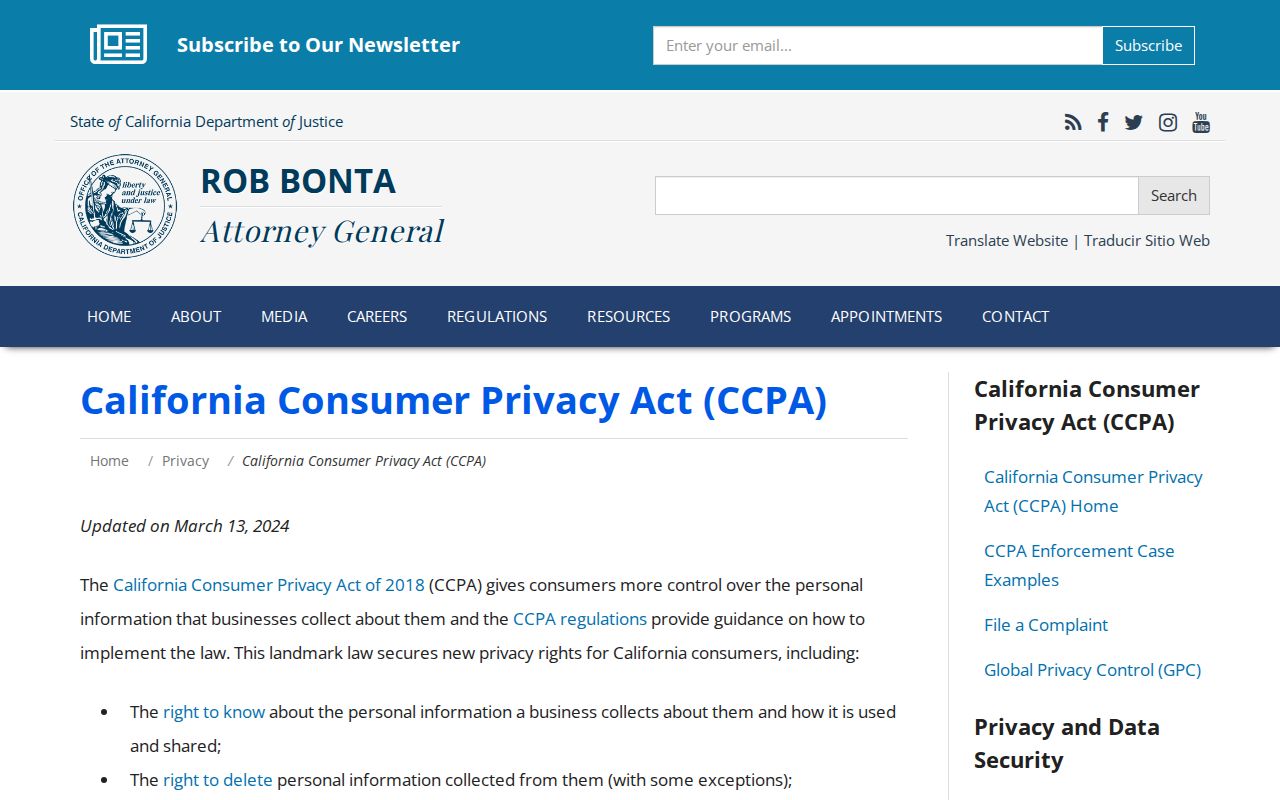
Privacy guidance supports a narrow, purpose-based use of ZIP groupings. It does not turn a ZIP into permission to assemble a private household roster.
Address Changes in the Claremont Postal Directory
New or changed site addresses can involve Claremont Community Development and Building, the county Assessor and GIS system, and USPS delivery validation. Each office updates a different layer. A city request can identify an existing permit or address record, while the Assessor handles parcel indexing and USPS confirms deliverability. A complete public E911 numbering formula was not located, so no odd-even or quadrant rule should be assumed.
The Los Angeles County Registrar-Recorder/County Clerk contact page is the practical route for county service questions when a ZIP record touches deeds, election products, or certificates.
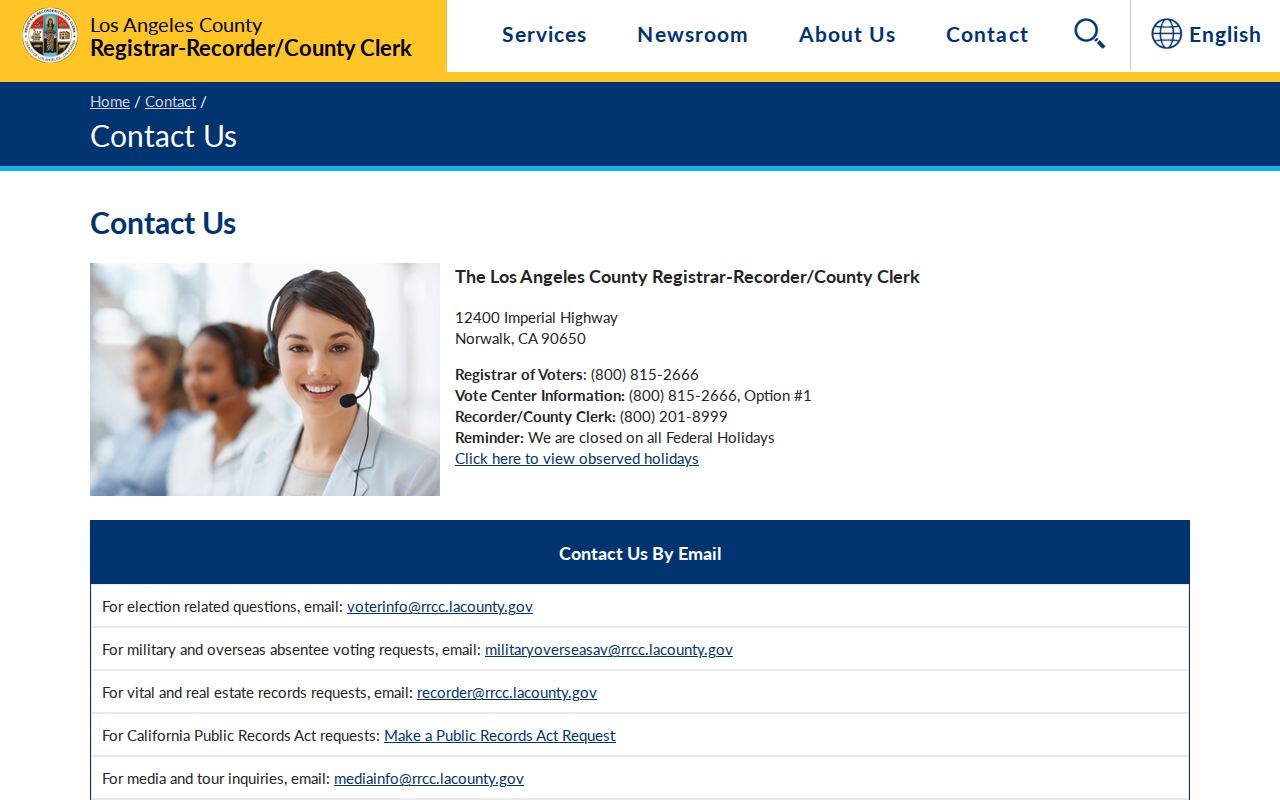
County contact channels help identify the correct custodian before a request is sent. They do not replace USPS address verification or the parcel map.
Privacy Around Claremont ZIP Groupings
ZIP information becomes sensitive when it is joined to a rare name, campus role, PO box, or protected address. California’s Consumer Privacy Act and related rights include access, deletion, correction, and opt-out rights for covered data, subject to exemptions. Use the official privacy route for a covered business and minimize the extra identifiers supplied during an inquiry.
The California Attorney General’s consumer complaint channel is a public route for reporting a business concern, but it is not a resident search tool. Use it for a documented privacy or consumer issue, keep the relevant URL, and avoid sending more identity material than the process requires.
The California consumer complaint source shows the proper public channel for a privacy-related concern.
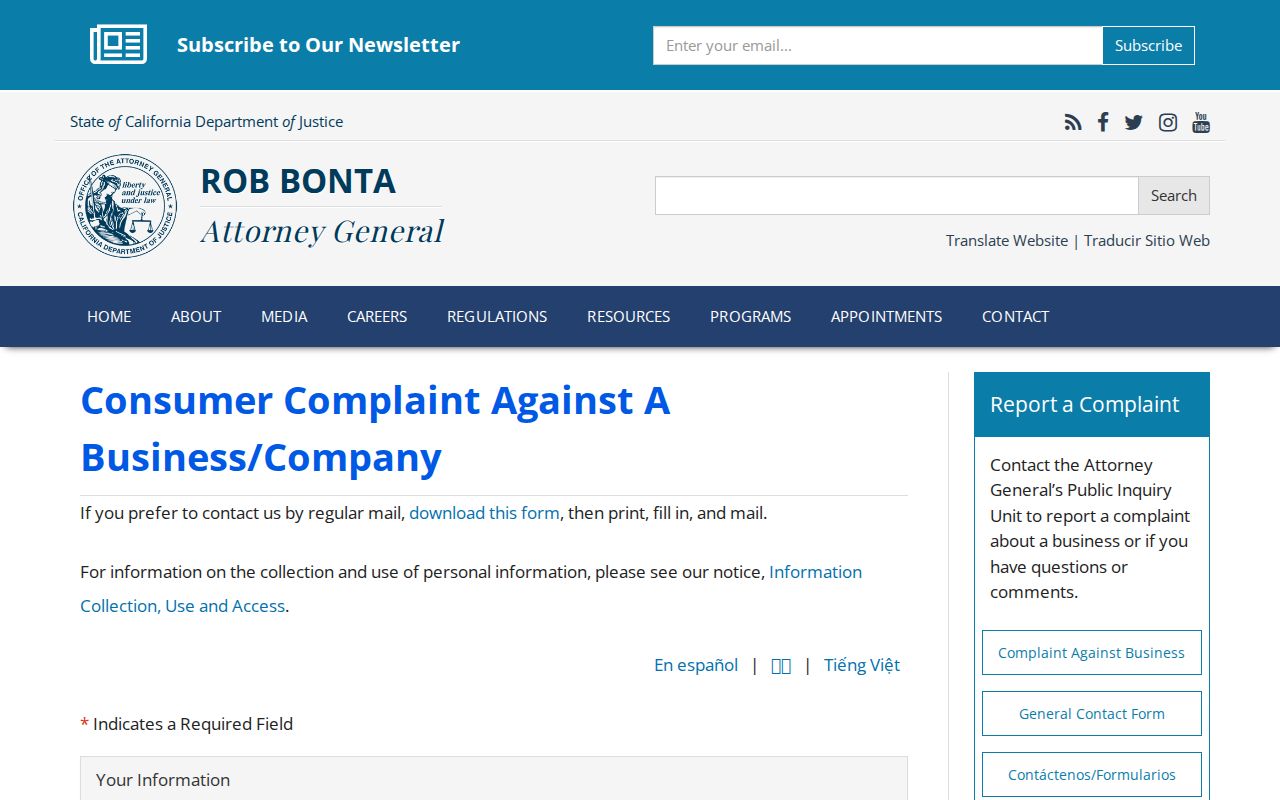
Keep ZIP groupings at the level needed for the task. When a person, parcel, or protected address is involved, return to the custodian and the narrowest lawful record request.